Stop paying tanker prices for someone else’s leak.
AquaLedger tracks every litre from municipal supply, borewells and tankers, catches leaks automatically, bills each flat by actual usage and forecasts shortages before the sump runs dry.
- Set up in a minute
- Works with manual readings
- Pays for itself with one leak
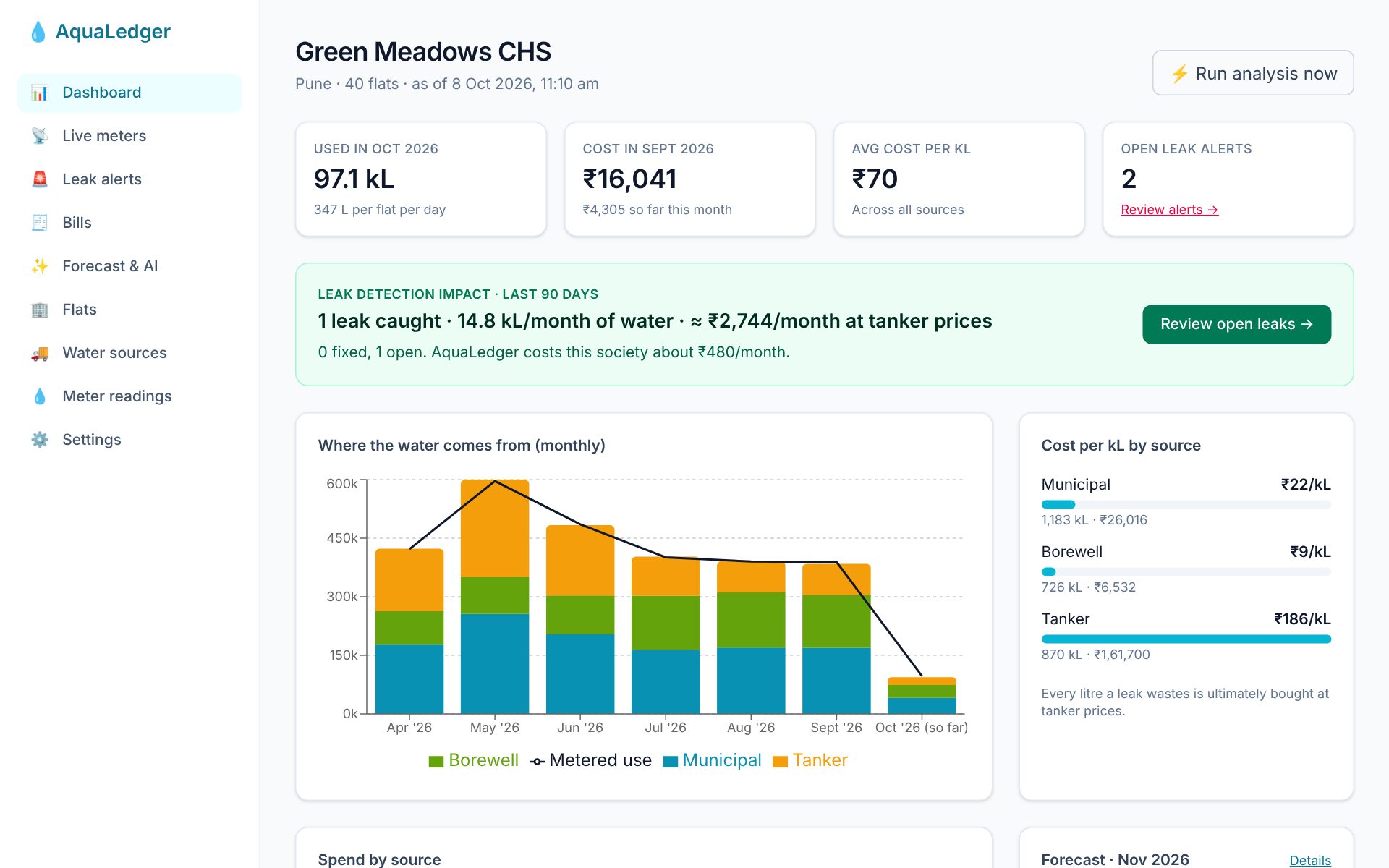
From six months of data in a 40-flat sample society
tanker water costs this much more than municipal supply
a month wasted by one running cistern, at tanker prices
flats pay less with usage-based bills
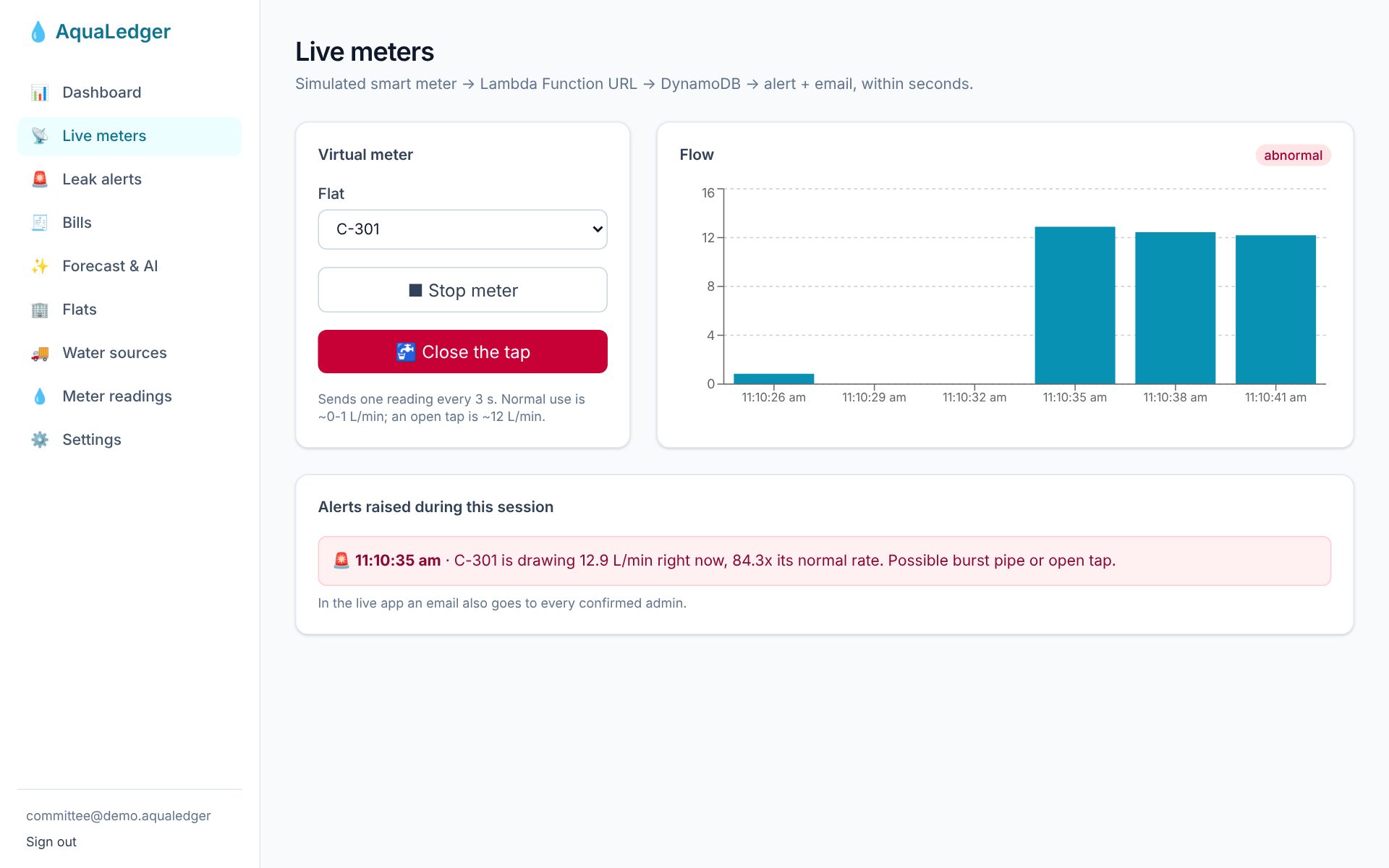
from an open tap to a live alert, then an email to the committee
Three sources of water. One bill split equally. Nobody sees the leak.
Municipal supply is rationed and borewells run low every summer, so societies buy tankers at 5-10× the price.
The bill is split equally so the flat with a leaking cistern pays the same as a retired couple. That's the argument at every AGM.
Leaks run for weeks because nobody is watching the meters at 3 a.m. Every litre lost is bought back at tanker prices.
Cost per kilolitre by source in the sample society. A leak is paid for at the tanker price.
How it works
From meter reading to fair bill, without spreadsheets.
Meter every litre
Type readings in, upload the CSV your meter reader sends, or connect smart meters for live data.
Catch leaks overnight
Every night each flat is checked for usage spikes and steady 2-4 a.m. flow. Live meters alert in seconds.
Bill by actual use
Each flat pays its share of metered litres plus a small common charge. One click, printable bills.
Plan tankers early
Next month's demand, tanker count and budget from your history and the season.
Find the running cistern before it costs a month of tanker water
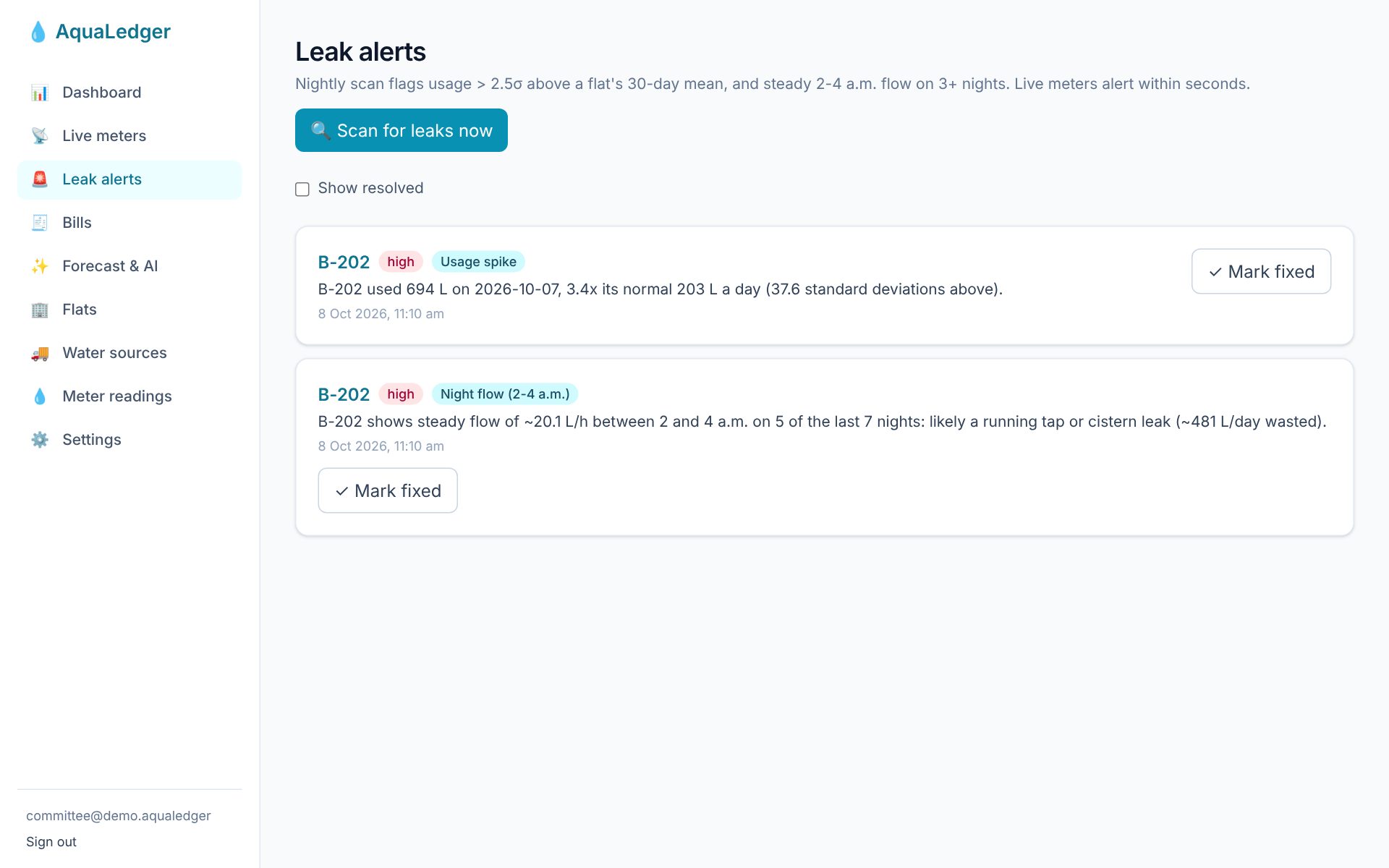
AquaLedger compares every flat with its own normal and watches for water flowing while everyone sleeps. The committee gets an email with the flat, the pattern and the litres being wasted.
- Usage spikes over 2.5σ above a flat's normal
- Steady flow between 2 and 4 a.m. on 3+ nights
- Live alerts within seconds from smart meters
End the equal-split argument at the AGM
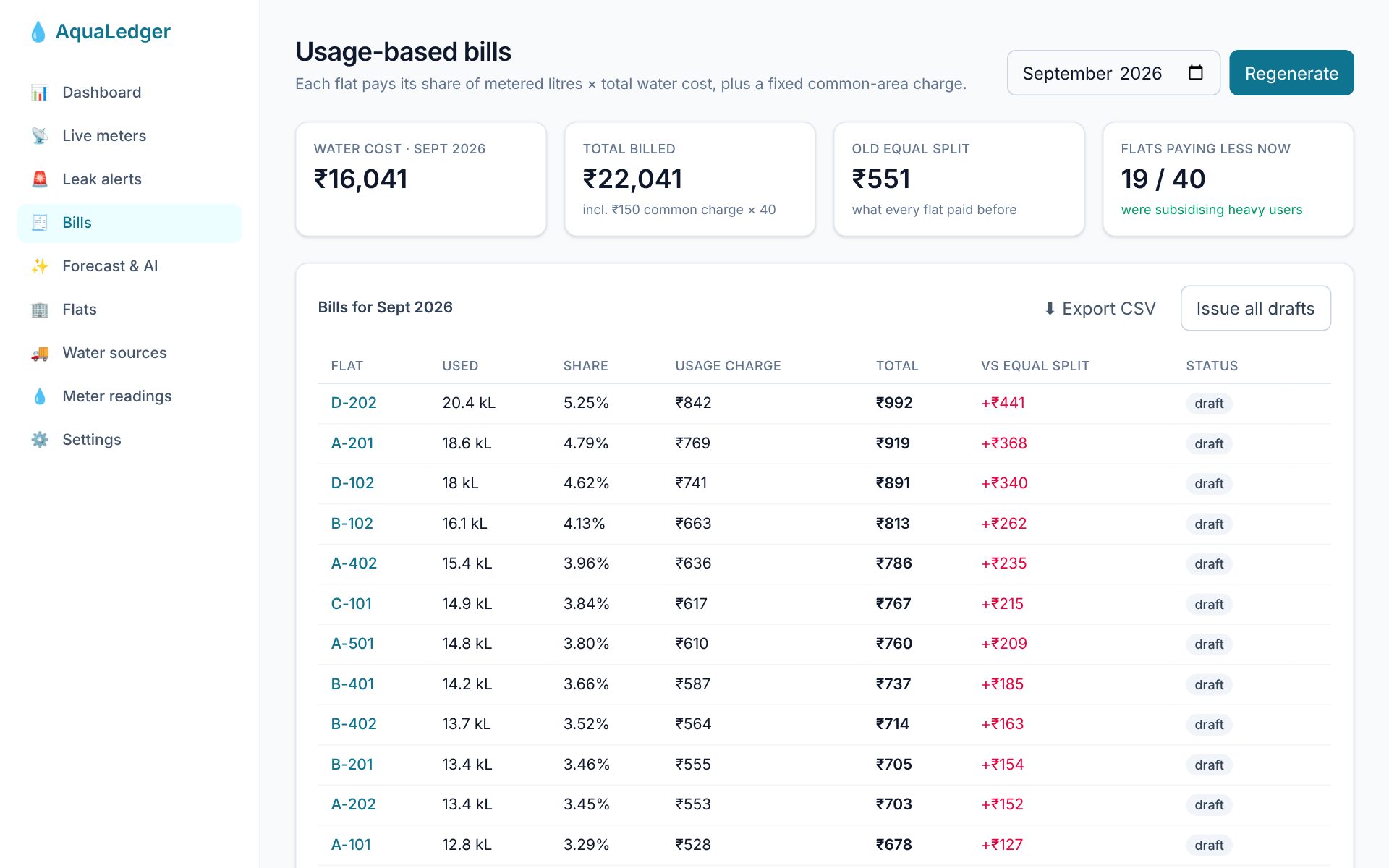
The society's real water cost (municipal supply, borewell power and every tanker) is shared by metered litres. Small households stop paying for the garden-hose flat.
- Each flat's share of the litres, side by side
- Shows what every flat paid under the old equal split
- Printable bills, CSV export for your accounts
Know how many tankers you'll need before summer hits
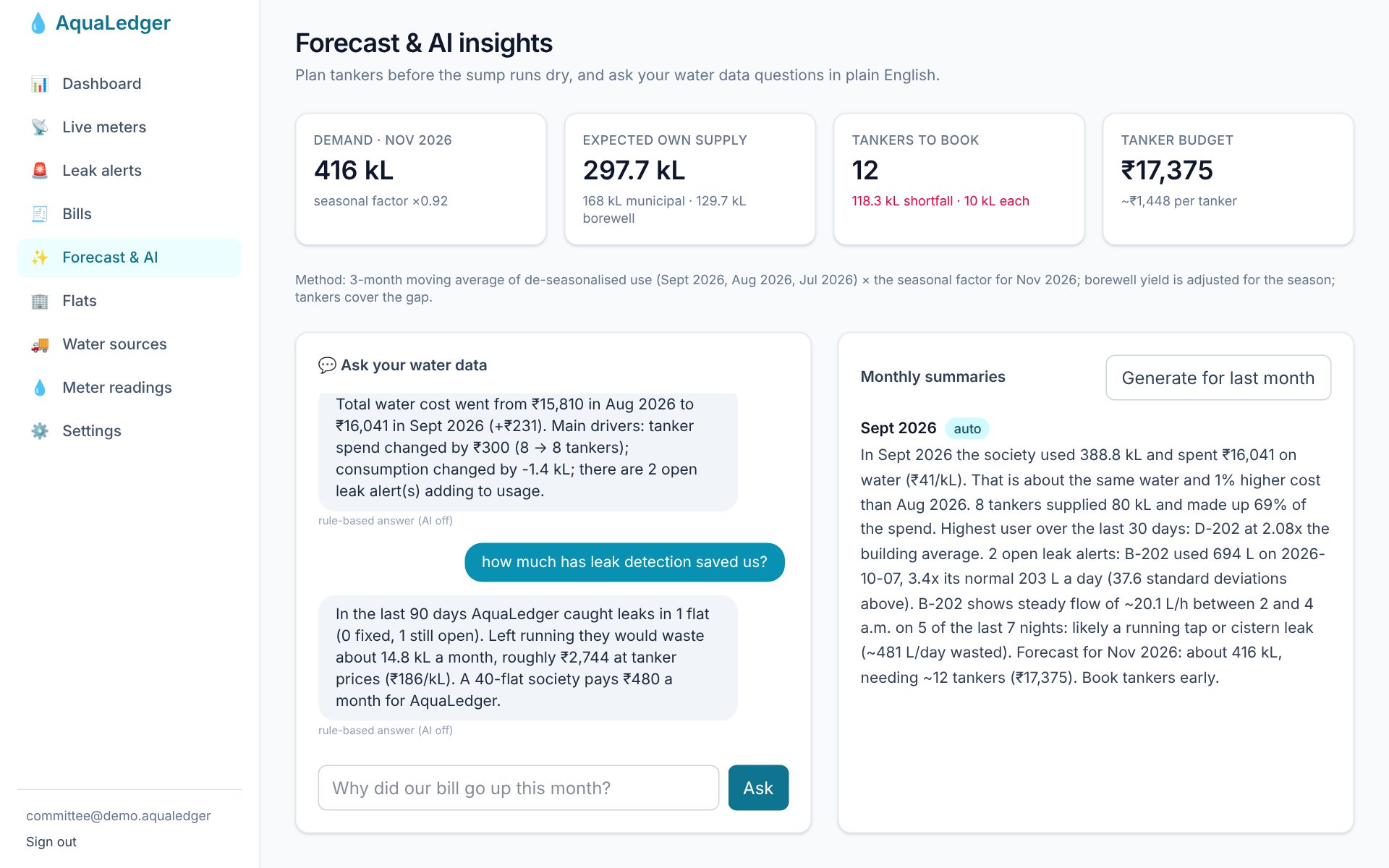
A seasonal forecast tells you next month's demand and tanker budget. Ask questions in plain English: why did the bill go up, which flats use the most, how much did leak detection save.
- 3-month moving average × seasonal factor
- Monthly summary written for the committee
- Plain-English answers from your own data
Watch a burst pipe show up in real time
Smart meters stream readings every few seconds. Abnormal flow raises an alert and emails the committee straight away.
- Works with any meter that can send an HTTPS request
- Per-society device tokens
- Test the whole chain from your browser
Same water bill. Fairly shared.
September in the sample society: ₹16,041 of water for 40 flats.
Everyone pays the same, whatever they use.
Each flat pays for what it uses, plus ₹150 for common areas.
Committee & treasurer
One dashboard for every source and rupee, bills in a click, and alerts before the AGM complaint.
Facility manager
Log tankers and readings from a phone, see which pump or flat is drawing water right now.
Residents
Their own usage against the building average and a bill they can understand. No more WhatsApp disputes.
What would it save your society?
Move the sliders. Leak savings alone, before fairer bills and better tanker planning.
About 1 in 10 homes has a significant leak (US EPA WaterSense estimate), so a 300-flat society can expect ~30 a year. Each is assumed to waste ~480 L/day, like the running cistern in our sample society, until AquaLedger flags it the next morning. AquaLedger priced at ₹12 per flat per month.
Simple per-flat pricing
A 300-flat society pays about ₹3,600 a month: less than two summer tankers.
Starter
- Up to 150 flats
- Manual + CSV readings
- Usage-based billing
- Leak alerts by email
Society
- Up to 600 flats
- Smart-meter live alerts
- Shortage forecasts
- Resident portal
Township
- Unlimited flats
- Monthly summaries & Q&A
- Multiple committee admins
- Priority support
Questions committees ask
Do we need smart meters?+
No. Most societies start with the readings they already take: type them in or upload a CSV. Smart meters add live leak alerts, and you can add them flat by flat.
What can residents see?+
Only their own flat: their usage against the building average, and their bills once the committee issues them. Never another flat's data.
How long does setup take?+
About a minute: create the society, add blocks and flats, and log your water sources. You can load six months of sample data first to see everything working.
Where is our data stored?+
On AWS in the Mumbai region, in a fully serverless setup. Each society's data is isolated by its own access group.
What if a reading is wrong?+
Bills stay drafts until the committee issues them, and re-running the bill run never touches bills you've already issued or marked paid.
Catch your society’s first leak this week.
Set up takes a minute. Load sample data to explore, then add your own readings when you’re ready.
Set up your society →